
Could You Assemble a V6 Engine or Explore a Medical Graft Just by Interacting in 3D?
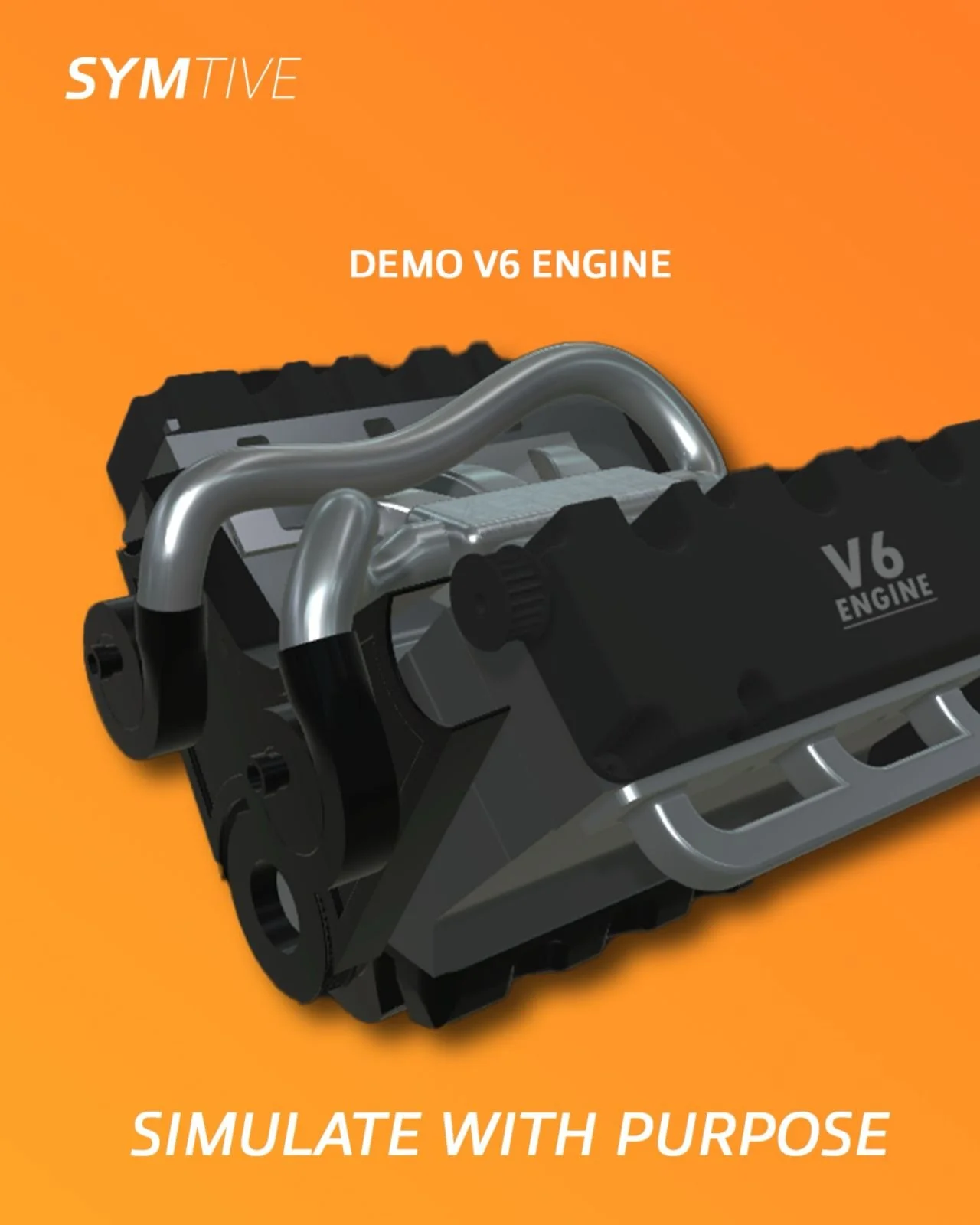
V6 Engine
Most technical training today still begins with manuals, classroom instruction, or videos explaining how complex systems work.
While these approaches provide valuable information, they often don’t allow learners to truly interact with the system they’re trying to understand.
But what if learning could start with something much simpler — exploring the system in 3D?
At Symtive, we’ve been exploring a different approach to technical learning through interactive simulation.
Instead of reading about systems or watching someone explain them, users can interact with components, visualize structures, and see how complex systems come together in real time.
This idea led us to create what we call the Quick Build Challenge.
The Quick Build Challenge
The concept is simple.
Explore a complex system in an interactive 3D environment and see how quickly you can understand how the parts fit together.
Rather than passively consuming training materials, users can actively explore systems by:
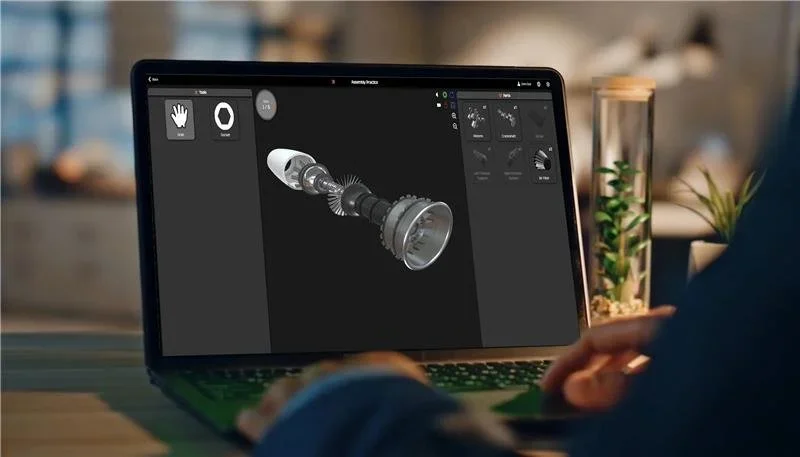
Our Turbine Engine Simulator
Rotating and inspecting components
Isolating individual parts
Viewing systems layer by layer
Seeing how parts connect and function together
This kind of interaction helps people develop a spatial understanding of complex systems, something that can be difficult to achieve through documentation alone.
Because our simulations run directly in a web browser, they can be accessed from a laptop, tablet, or phone without requiring special hardware, downloads, or VR headsets.
This makes it easy for organizations to deploy interactive training experiences across teams, locations, and even global workforces.
Examples of Interactive Learning
To demonstrate how simulation can help people understand complex systems more quickly, we created several interactive examples.
V6 Engine Assembly
In this example, users can explore the structure of a combustion engine and see how the major components fit together. By interacting with the engine in 3D, it becomes easier to understand how the different parts contribute to the overall system.
Turbine Engine Structure
Turbine engines are highly complex systems made up of multiple sections and intricate components. Through interactive exploration, users can visualize how these sections relate to each other and how the engine is structured.
Medical Graft Procedure
Interactive simulation can also play an important role in healthcare education. In this example, users can explore a medical graft procedure step by step within a visual 3D environment, helping illustrate the process in a way that traditional diagrams cannot.
Each example highlights how quickly complex concepts can become clearer when people can see, rotate, and interact with systems in three dimensions.
· Why Interactive Simulation Matters
Organizations across many industries—including manufacturing, aerospace, energy, and healthcare—are facing similar training challenges:
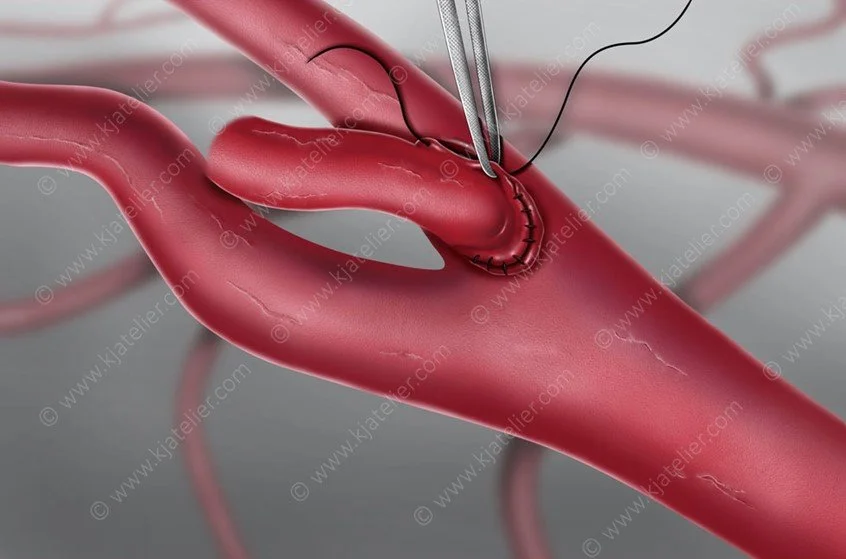
Vascular Graft / Blood Vessel Procedure
Complex equipment and procedures
A retiring workforce and knowledge transfer gaps
Limited access to equipment for training purposes
The need to train distributed teams across multiple locations
Interactive simulation offers a practical way to help address these challenges by allowing teams to explore systems and processes in a safe, accessible environment.
Learners can build familiarity with systems before working on real equipment, reducing risk while improving confidence and understanding.
Browser-Based Simulation and the Future of Training
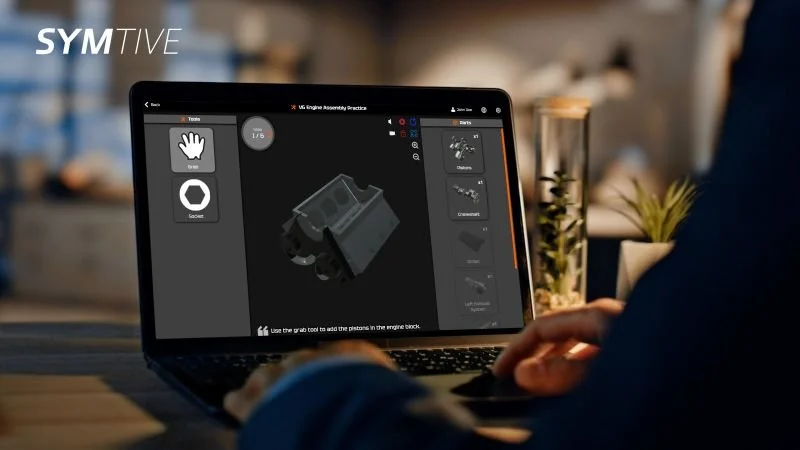
Our V6 Engine Simulator
While immersive technologies like virtual reality often receive significant attention, many organizations are discovering that browser-based simulation provides one of the most scalable and accessible approaches to training.
Because simulations can run directly in a web browser, organizations can deploy training experiences across entire workforces without the need for specialized hardware.
Teams can access training anytime, anywhere, using devices they already have.
In many cases, the fastest way to understand a complex system is simply to interact with it.
Try the Quick Build Challenge
If you’re curious about how interactive simulation can bring complex systems to life, try one of our Quick Build Challenge demos and experience how exploring systems in 3D can accelerate understanding.
And if your organization is exploring new ways to improve workforce training, simulation may provide a powerful way to help teams learn faster and more effectively.