
What’s Actually Working in Workforce Training Today

Running into the same issues with training?
For years, organizations have poured resources into training programs, classroom sessions, online modules, certifications, and hands-on instruction. Yet many leaders keep running into the same frustrating reality: employees complete the training, but when it counts, performance doesn't always follow.
That gap is forcing a hard rethink of what effective training actually looks like.
Across manufacturing, healthcare, energy, and other complex industries, a clearer picture is emerging. Certain approaches are consistently delivering better outcomes. Others are quietly being phased out.
The Shift from Completion to Capability
One of the most important changes happening in workforce training right now is a shift from measuring completion to measuring capability.
For a long time, success meant finishing a course or passing a multiple-choice assessment. Today, the real question organizations are asking is:
Can this employee actually perform the task when it matters?
This shift toward competency-based training is reshaping how programs are designed away from passive content delivery and toward active application, real decision-making, and demonstrated performance.
Learning by Doing, Not Just Watching
Manuals, videos, and presentations still have a place. But on their own, they're no longer enough.
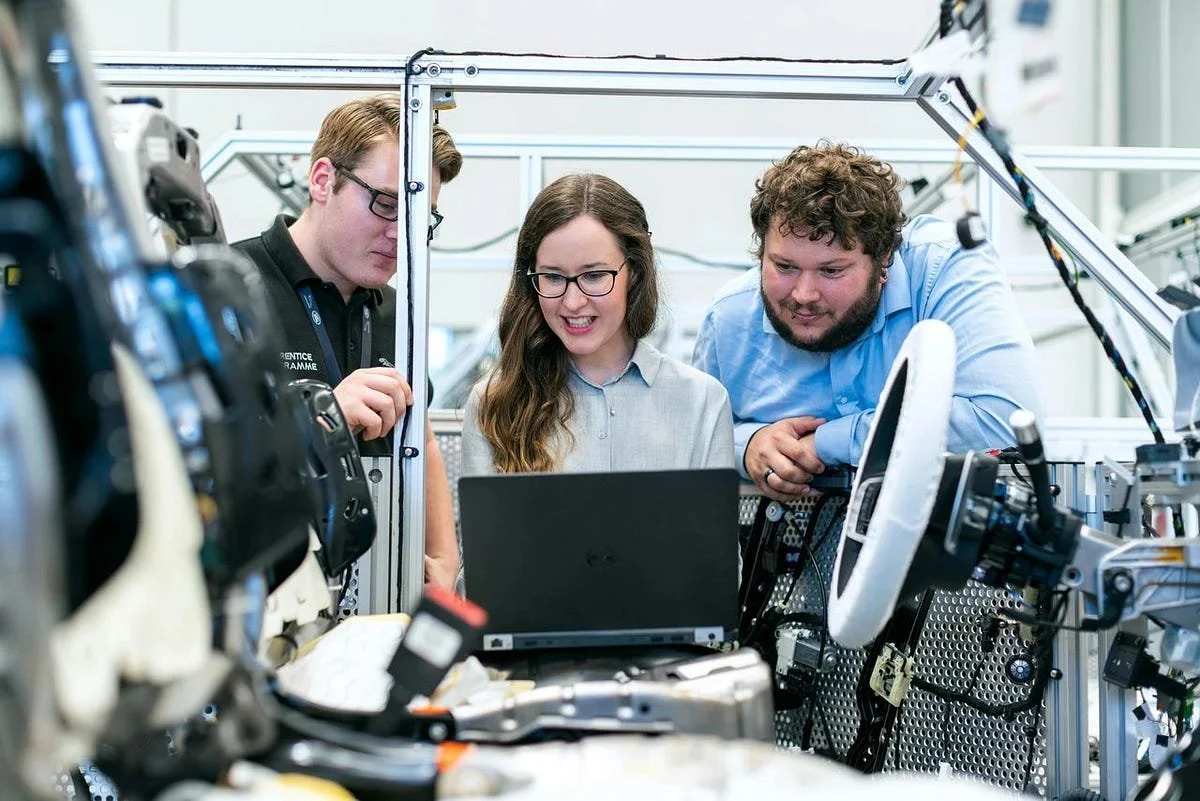
Learning by doing and seeing
What's consistently working is experiential learning, training that requires employees to actively engage, not just observe. Whether that means walking through a complex assembly procedure, troubleshooting a fault condition, or responding to a safety scenario, the act of doing changes how information is retained.
When learners make decisions and see the direct consequences of those decisions, two things happen: retention improves, and confidence builds. Both matter enormously in high-stakes environments.
Repetition That Turns Knowledge Into Instinct
In technical and safety-critical roles, employees may only encounter certain situations once every few months or once every few years. When those moments arrive, hesitation is costly.
Training that allows employees to repeat complex or high-risk scenarios over and over is proving far more effective than one-time instruction. There's no shortcut here: repetition is what transforms knowledge into the kind of instinctive, reliable performance that organizations actually need.
Training That Fits Into the Workday
Accessibility has always been one of training's biggest obstacles. If getting trained means scheduling time away from the floor, traveling to a facility, or waiting on instructor availability, it inevitably becomes infrequent and inconsistent.
The shift happening now is toward training that fits naturally into the flow of work. Employees can access it before performing a new or complex procedure, after encountering an issue, or as part of ongoing development, without disrupting operations.
This turns training from a scheduled event into a continuous practice.
Consistency Across Sites and Teams
For companies operating across multiple locations, consistent training has always been a challenge. Different sites interpret procedures differently. Instructors deliver content in different ways. Standards drift.
Standardized training experiences are where every employee works through the same scenarios, the same procedures, and the same expectations, and are becoming a competitive necessity. Consistency at the training level drives consistency in safety, quality, and performance across the entire organization.
Why Simulation Is at the Center of All of This
The most significant development in workforce training today is the increased use of simulation and it's not hard to see why.
Simulation brings together everything that's proven to work:
Experiential learning - employees actively do, not just watch
Repetition - scenarios can be run as many times as needed
Decision-based practice - learners face real choices with real consequences
Consistency - every employee trains in the same controlled environment
By recreating real-world procedures and situations before employees encounter them on the job, simulation closes the gap between training and performance. It's especially powerful for complex equipment operation, assembly, and maintenance procedures, safety and emergency response, and clinical or technical workflows, anywhere where mistakes in the real world are expensive or dangerous.
Browser-Based Delivery: Removing the Barriers
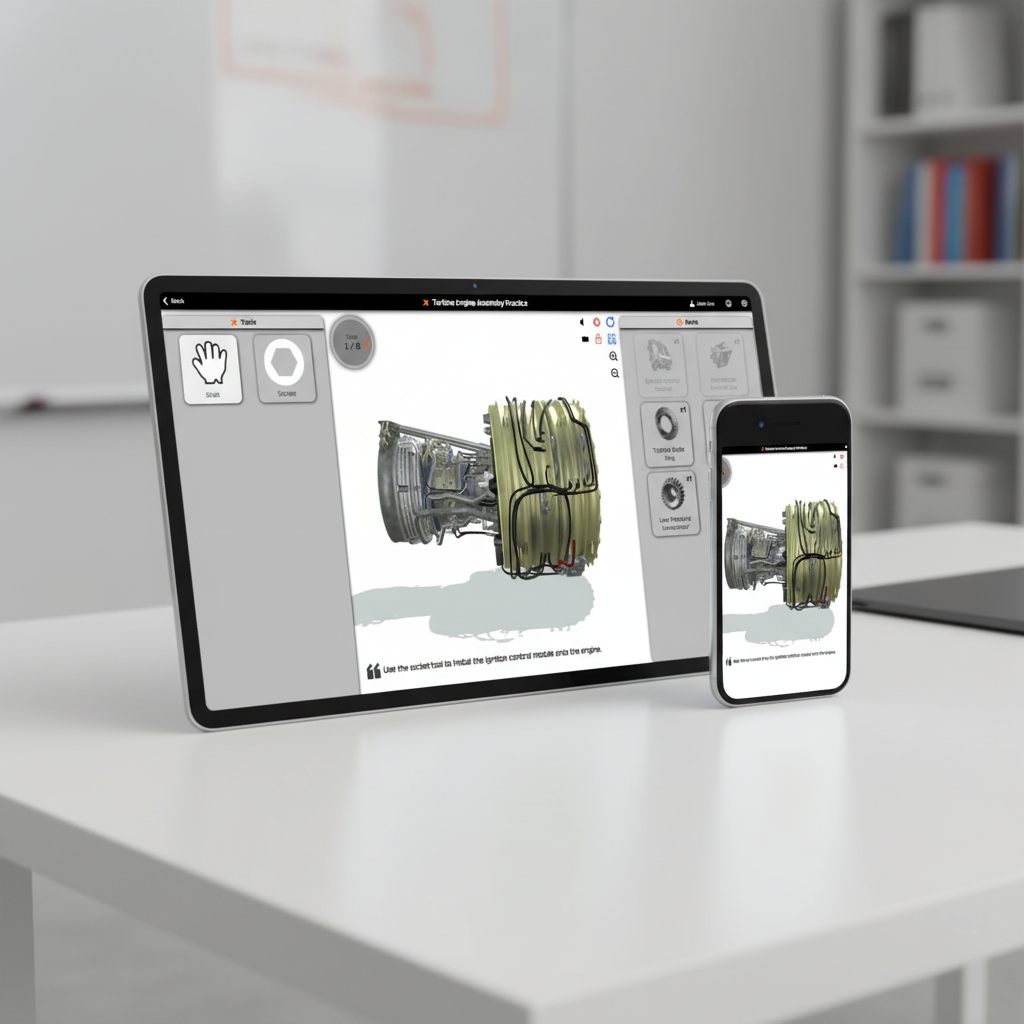
Browser-Based Training, Anywhere, Anytime and Any Device
How training is delivered matters just as much as how it's designed.
Browser-based simulation platforms are making it possible for organizations to deploy consistent, high-quality training across large and distributed workforces without specialized hardware, complicated installations, or lengthy rollouts.
Employees can access training from any device, at any time, from any location. Updates roll out instantly across every site. And training scales as the organization grows, without proportionally growing the cost or complexity.
For many companies, this kind of accessibility is what finally makes continuous training practical rather than aspirational.
Measuring What Actually Matters
Training is also becoming more measurable in the ways that actually matter.
Beyond completion records, organizations are beginning to track how employees perform during training: where they hesitate, where they make errors, how their decision-making improves over time. This kind of data turns training from a checkbox into a feedback loop, one that helps organizations identify where gaps exist and target development more precisely.
The Bottom Line
The future of workforce training isn't about replacing traditional methods. It's about pairing them with approaches that are more interactive, more accessible, and more directly tied to real-world performance.
The organizations seeing the strongest results are focused on four things:
Practical skill development over content consumption
Continuous learning over one-time events
Realistic training environments that mirror actual job conditions
Scalable delivery that works across teams and locations
The question is no longer just how do we train our people, it's how do we make sure training actually shows up in performance when it matters most.
That's the standard worth building toward.
Symtive builds browser-based training simulators that help organizations train their workforce on complex procedures from equipment assembly to safety-critical operations. Learn more at symtive.com